
New York is a city that operates on a different frequency. The energy is real, the scale is disorienting, and the sheer volume of things to see, eat, and experience can turn even a well-planned trip into a blur if you don’t approach it with some structure. Five days gives you enough time to see the icons, explore the neighborhoods that give the city its actual character, and still leave room for the kind of unplanned moments that make New York feel like the most alive place on Earth.
I’ve spent years working in travel and hospitality, and New York is the city I get asked about most. I even returned from there last week after spending 7 days there for the fourth year in a row. The advice I always give is the same: don’t try to see all of Manhattan in a day. The city is built in neighborhoods, and each one has its own rhythm, its own food, and its own reason to visit. This itinerary is structured so that each day stays in one area, minimizing subway time and maximizing the hours you spend on the street, which is where New York actually happens.
One practical note: book anything with timed entry in advance. The Statue of Liberty, the Empire State Building, the Met, the 9/11 Memorial Museum, and Broadway shows all sell out or involve long waits if you show up without a reservation.
Day 1: Lower Manhattan and the Brooklyn Bridge
Morning: Statue of Liberty and Ellis Island
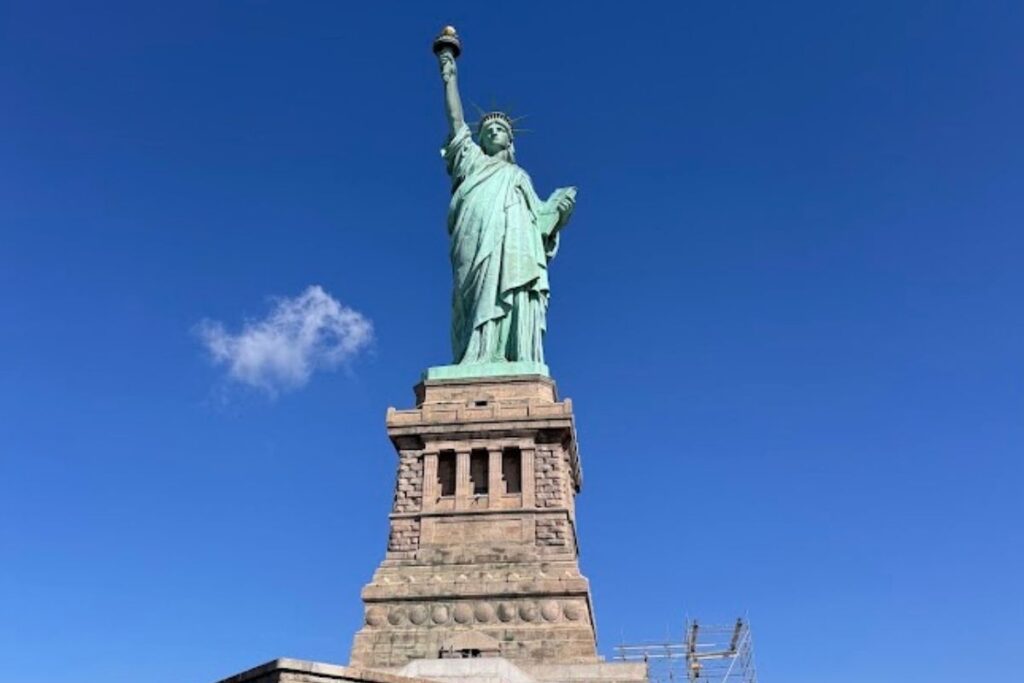
Start your first day with the two landmarks that define what New York has meant to the world. The Statue of Liberty, a gift from France unveiled in 1886, stands 93 meters tall on Liberty Island and remains one of the most recognized symbols on the planet. Ellis Island, just next door, processed over 12 million immigrants between 1892 and 1954, and for many families, it’s where their American story began.
The ferry departs from Battery Park in Lower Manhattan, and the first departure at 8:30 AM is the one you want. The earlier you go, the fewer crowds you’ll encounter on Liberty Island. A guided tour adds historical depth that the audio guide alone can’t match, and if you’ve booked pedestal or crown access to the statue, a guide helps you manage your time across both islands efficiently.
Afternoon: 9/11 Memorial, One World Observatory and Wall Street
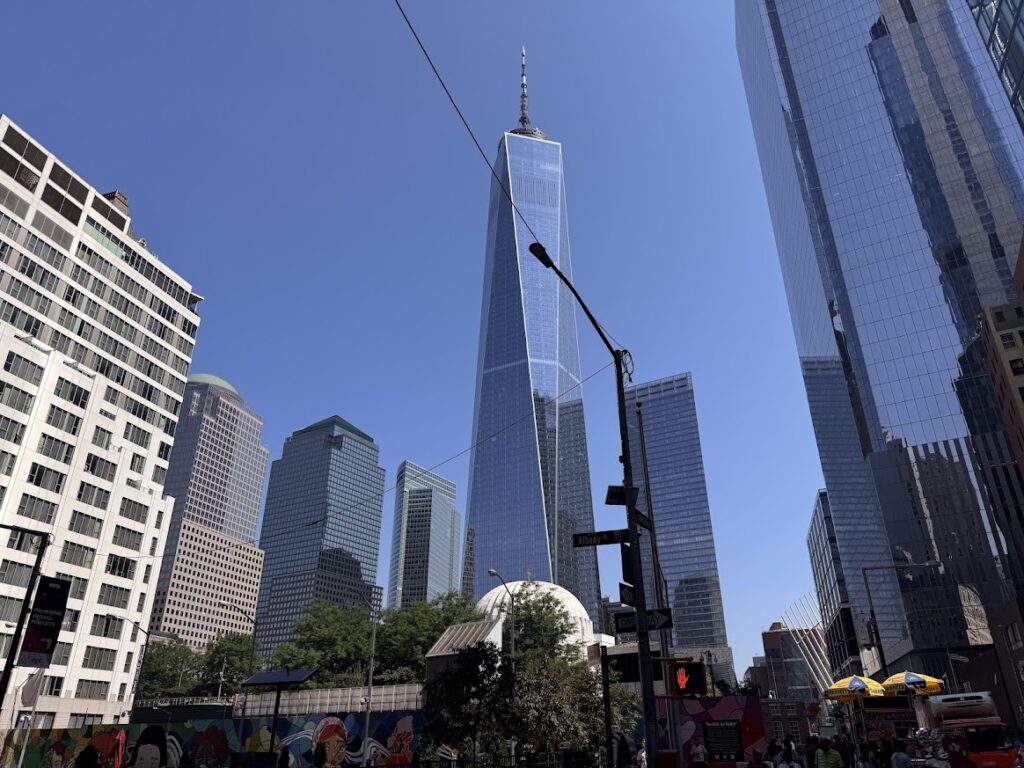
From Battery Park, walk north into the Financial District. The 9/11 Memorial occupies the footprints of the original Twin Towers, with two enormous reflecting pools surrounded by the names of every person who died in the attacks. The adjacent 9/11 Memorial Museum is one of the most powerful museum experiences in the United States, and you should allow at least 90 minutes inside.
Afterward, take the elevator to the top of One World Observatory, the observation deck on floors 100 through 102 of One World Trade Center, the tallest building in the Western Hemisphere at 541 meters. The 360-degree views stretch across all five boroughs, New Jersey, and on clear days, roughly 80 kilometers in every direction.
Walk east through the narrow streets of the Financial District past the New York Stock Exchange, Federal Hall (where George Washington was inaugurated as the first president), and the Charging Bull sculpture on Broadway. This is the oldest part of Manhattan, and the contrast between the 17th-century street grid and the skyscrapers above it is one of the most visually striking things in the city.
Evening: Brooklyn Bridge at Sunset
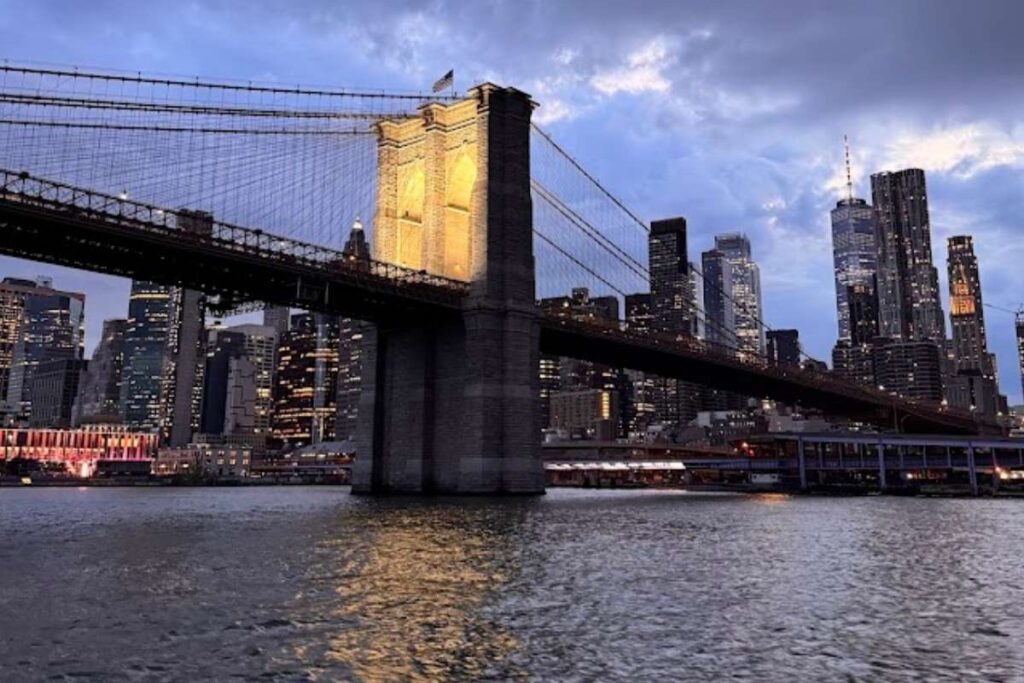
End your first day with one of New York’s great free experiences: walking the Brooklyn Bridge at sunset. The pedestrian walkway runs above the traffic on a wooden boardwalk, and the views of the Manhattan skyline, the East River, and the bridge’s Gothic stone towers are extraordinary in the golden-hour light.
On the Brooklyn side, descend into DUMBO (Down Under the Manhattan Bridge Overpass), one of the city’s most photogenic neighborhoods. The view of the Manhattan Bridge framed between brick warehouses on Washington Street is one of the most photographed spots in New York. Have dinner here, or walk along the Brooklyn Bridge Park waterfront before heading back.
Day 2: Midtown Icons
Morning: Empire State Building and Grand Central Terminal
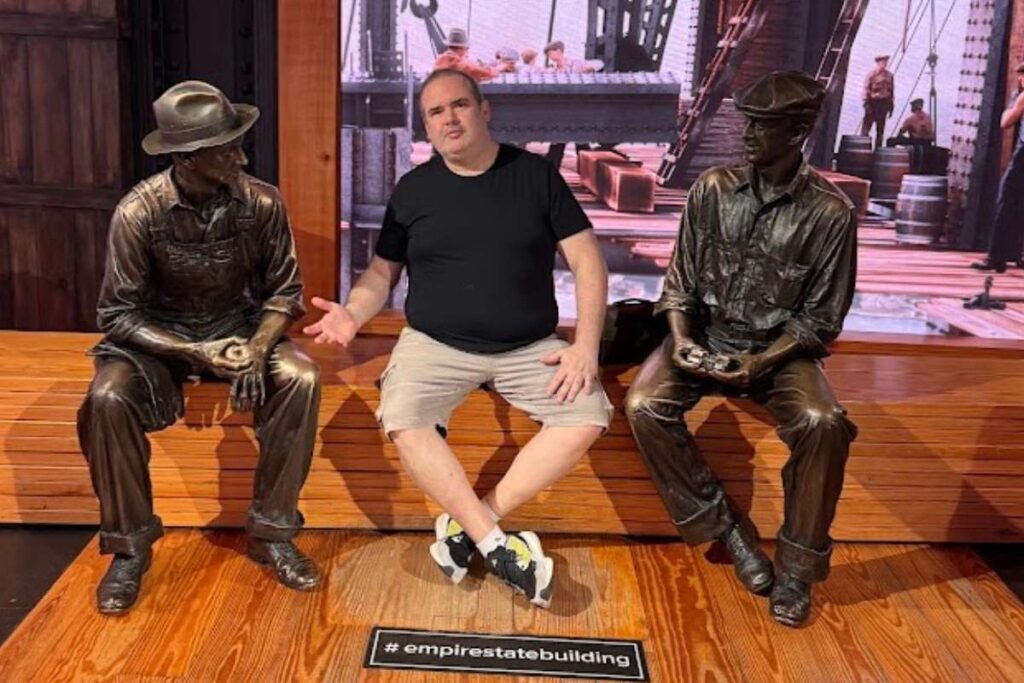
Midtown Manhattan is where New York looks exactly like you imagined it would. Start early at the Empire State Building, the 102-story Art Deco tower that defined the city’s skyline from its completion in 1931 until the World Trade Center surpassed it four decades later. The 86th-floor observation deck is open-air, and on a clear morning before the crowds arrive, the views are unobstructed in every direction.
From there, walk east to Grand Central Terminal, one of the most beautiful train stations in the world. The main concourse, with its vaulted ceiling painted with a mural of the zodiac constellations, is worth visiting even if you’re not catching a train. Look for the whispering gallery near the Oyster Bar on the lower level, where the acoustics of the tiled arches allow a whisper in one corner to be heard perfectly in the opposite corner.
Afternoon: MoMA, Rockefeller Center and Fifth Avenue
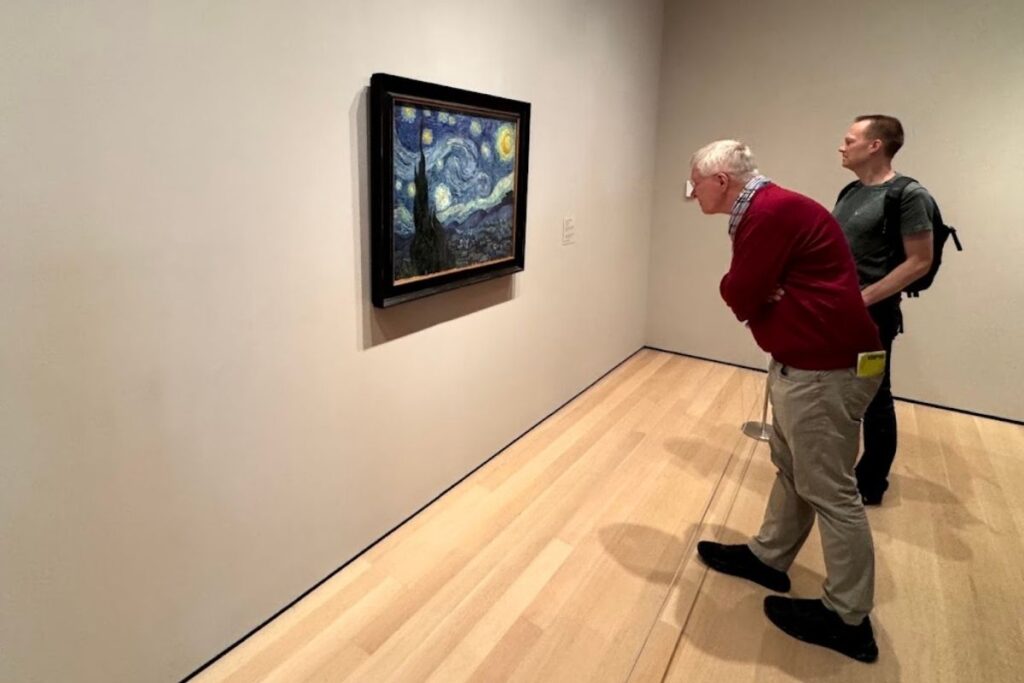
Walk north to the Museum of Modern Art (MoMA), one of the most important collections of modern and contemporary art in the world. The permanent collection includes Starry Night by Van Gogh (photo), Les Demoiselles d’Avignon by Picasso, Campbell’s Soup Cans by Warhol, and works by Monet, Dalí, Pollock, and Frida Kahlo. Two hours is the minimum to see the highlights without rushing.
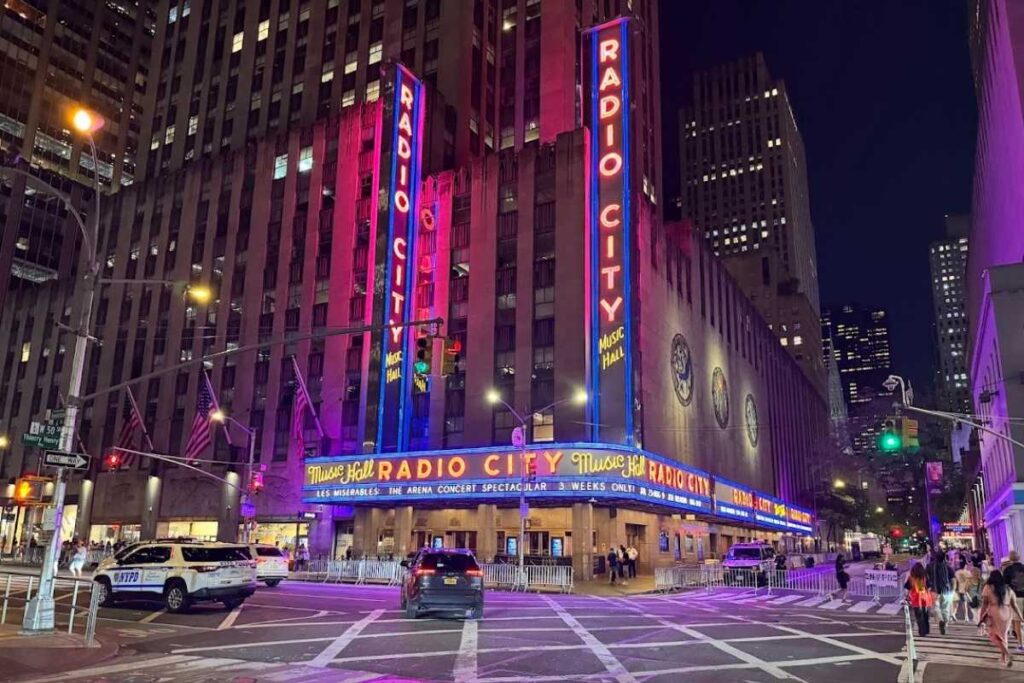
Continue north along Fifth Avenue past St. Patrick’s Cathedral, the largest Gothic Revival cathedral in North America, and Rockefeller Center, the Art Deco complex that has been the commercial and cultural heart of Midtown since the 1930s. If you didn’t get your skyline views from the Empire State Building, Top of the Rock offers a different perspective that includes the Empire State Building itself in the frame.
Evening: Broadway
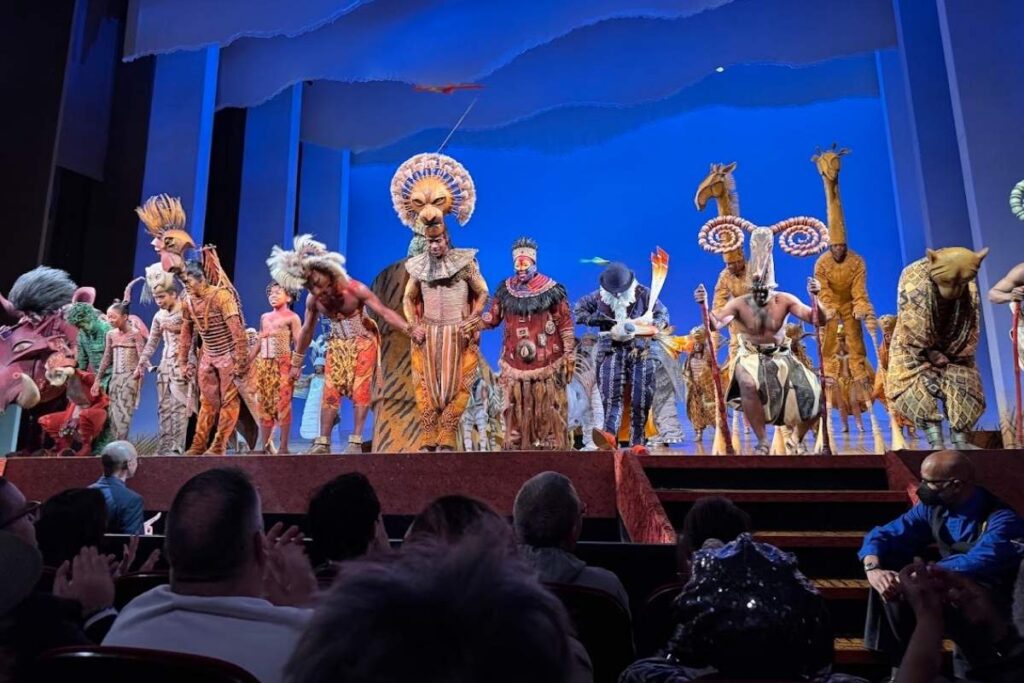
There is no substitute for seeing a Broadway show in the theater district where it was meant to be seen. The stretch of theaters along Broadway and the surrounding blocks between 41st and 54th Streets constitutes the highest concentration of professional theater in the English-speaking world, and the production quality, from the staging to the orchestration, is unlike anything else.
Book in advance for popular shows. If you’re flexible on what to see, TKTS booths in Times Square and Lincoln Center sell same-day tickets at 20 to 50 percent off. After the show, Times Square at night, love it or not, is a sensory experience that belongs on any first visit.
Day 3: Central Park and Upper Manhattan
Morning: Central Park
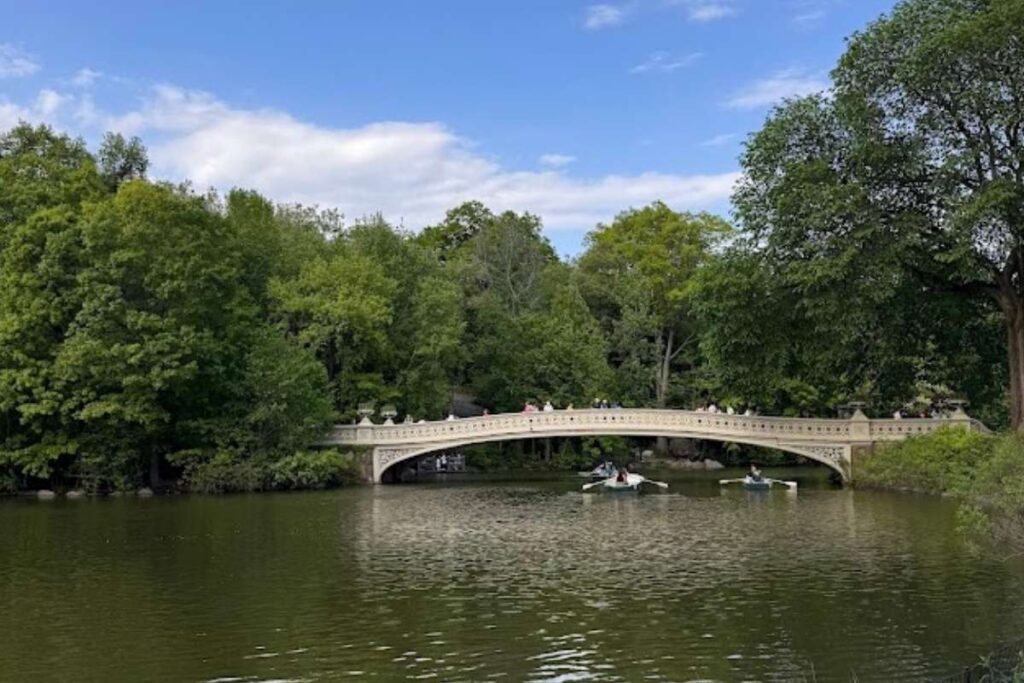
Central Park is 341 hectares of green space carved into the center of Manhattan, and it is one of the most extraordinary urban parks ever created. Designed by Frederick Law Olmsted and Calvert Vaux in the 1850s, the park was built entirely by hand on swampy, rocky terrain and now receives over 42 million visitors a year.
Enter from the west side at 72nd Street and walk to Strawberry Fields, the quiet memorial to John Lennon just steps from the Dakota Building where he lived and was killed. Continue east to the Bethesda Terrace and Fountain, the architectural centerpiece of the park, and cross the Bow Bridge for one of the most photographed views in the city. If you have time, continue north to Belvedere Castle and the Jacqueline Kennedy Onassis Reservoir, where the running path offers panoramic views of the skyline on both sides.
A guided walking or bike tour through the park covers more ground and provides context about the park’s design, history, and the surprising amount of wildlife that lives here.
Afternoon: The Metropolitan Museum of Art
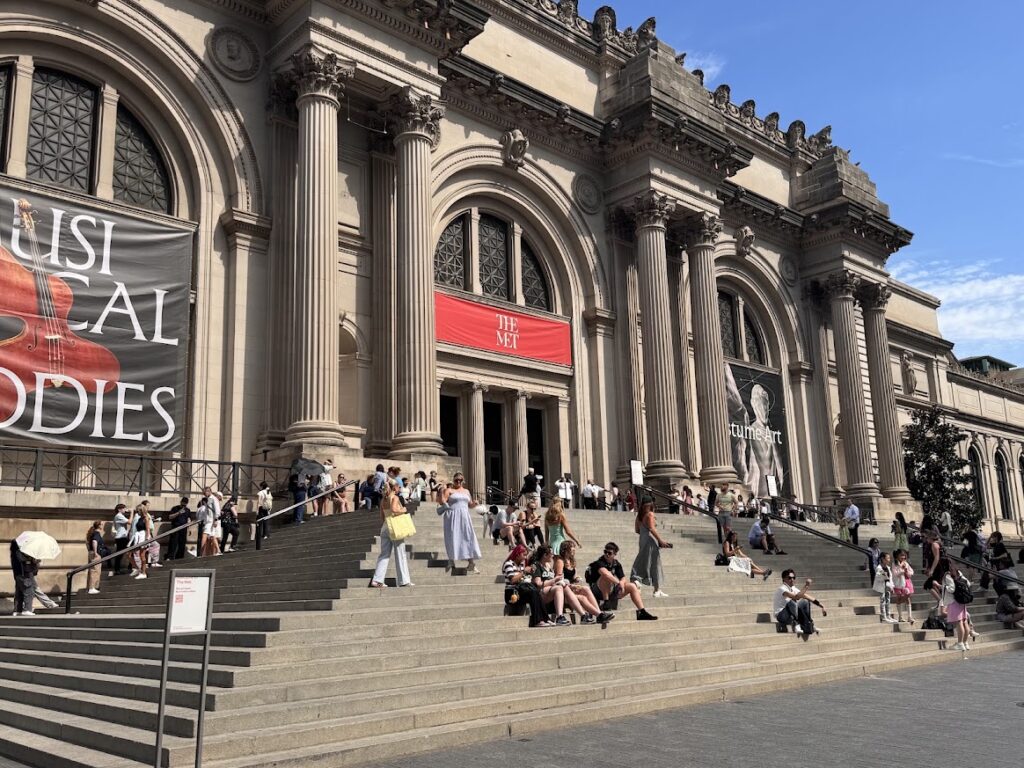
The Met is the largest art museum in the Americas and one of the most visited in the world, with a permanent collection of over two million works spanning 5,000 years of human creativity. You cannot see it all in an afternoon, and you should not try.
Focus on what draws you. The Egyptian Wing, anchored by the Temple of Dendur (a complete 2,000-year-old Egyptian temple relocated stone by stone), is one of the most spectacular museum rooms anywhere. The European Paintings galleries contain works by Vermeer, Rembrandt, Caravaggio, and the Impressionists. The American Wing includes Washington Crossing the Delaware and period rooms that trace the evolution of American domestic life. And the Rooftop Garden, open seasonally, offers views of Central Park and the skyline that rival any observation deck.
A guided tour of the highlights ensures you spend your time on the works that matter most rather than wandering the 200-plus galleries without a plan.
Evening: Harlem Food and Jazz
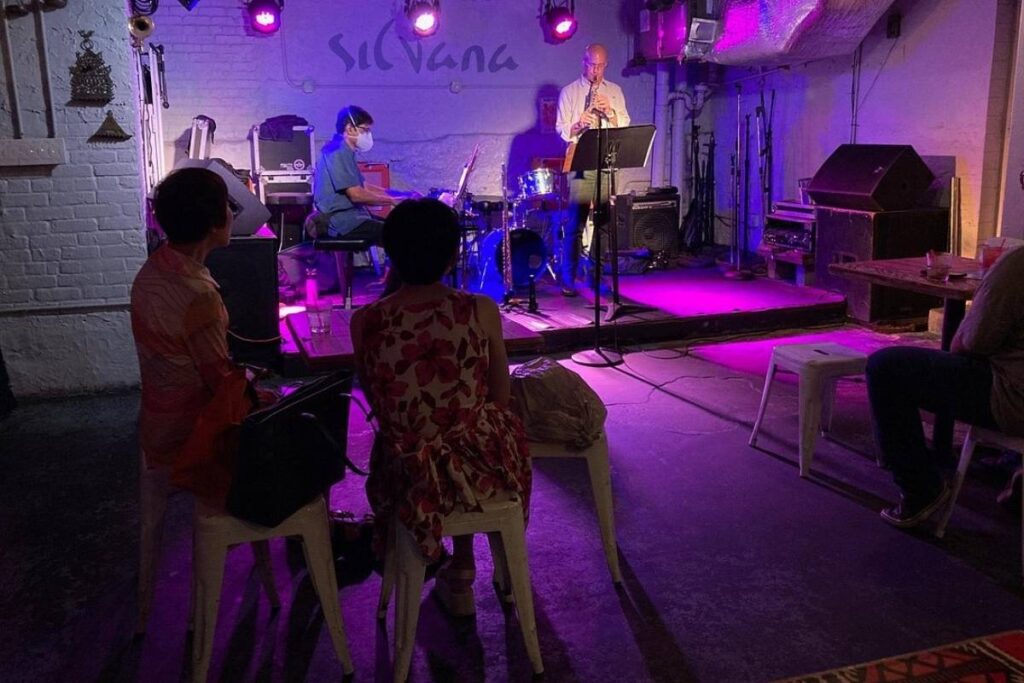
Head north to Harlem, the neighborhood that shaped the Harlem Renaissance, American jazz, and African American culture in ways that still resonate across the world. The food here is exceptional: soul food restaurants serve dishes like fried chicken, collard greens, mac and cheese, and cornbread that have deep roots in the African American culinary tradition.
A food and jazz tour through Harlem connects the cuisine to the cultural history, with stops at local restaurants and a visit to a live jazz venue. This is a side of New York that most first-time visitors never see, and it’s one of the most rewarding evenings the city can offer.
Day 4: Downtown Neighborhoods
Morning: SoHo and NoHo

Spend your fourth morning in the neighborhoods where New York’s creative identity lives closest to the surface. SoHo (South of Houston Street) holds the world’s largest collection of cast-iron architecture, industrial buildings from the mid-1800s that were saved from demolition, colonized by artists in the 1960s and 70s, and now house fashion boutiques and galleries. NoHo (North of Houston), directly above, shares the same architectural character but with a quieter atmosphere.
Walk Greene Street for the longest continuous stretch of cast-iron facades in the city. Look for the Richard Haas trompe l’oeil mural at Prince and Greene, and the sidewalk carvings by Ken Hiratsuka at Prince and Broadway. The street art in this area changes constantly and rewards anyone who looks beyond the storefronts.
Afternoon: Little Italy, Chinatown and the Lower East Side
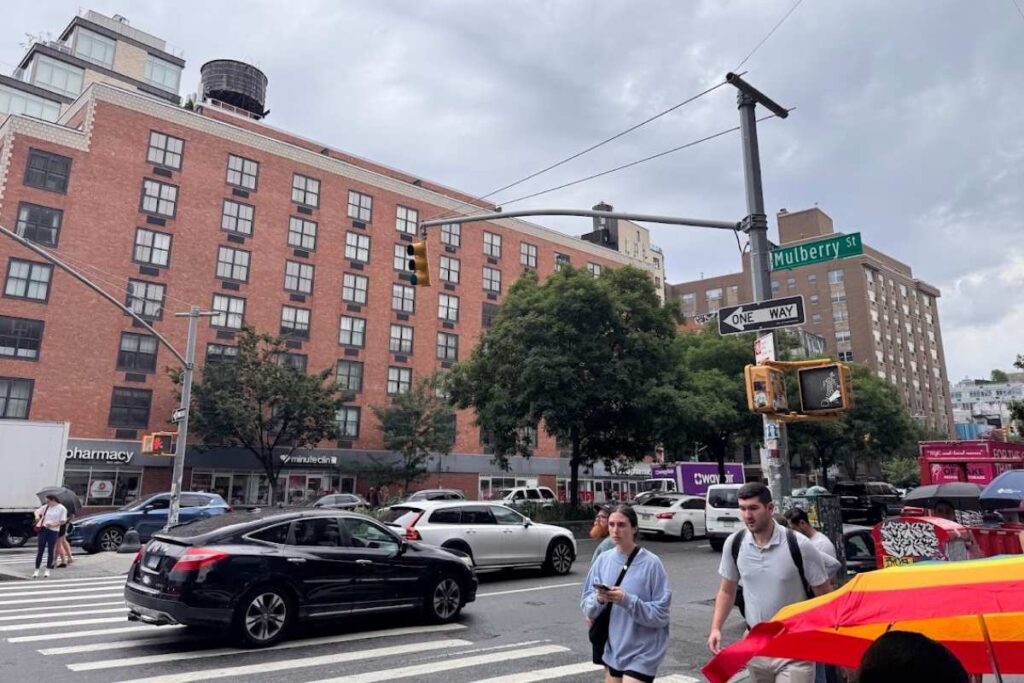
Continue south into neighborhoods where immigration shaped the city block by block. Little Italy has shrunk to a few blocks along Mulberry Street, but the atmosphere remains. Chinatown, just south, is one of the largest Chinese-American communities in the Western Hemisphere, with dim sum parlors, tea shops, herbal medicine stores, and produce markets that have operated for generations.
Cross east into the Lower East Side, the neighborhood that absorbed waves of Jewish, Irish, Italian, and Puerto Rican immigrants over the past two centuries. The Tenement Museum at 97 Orchard Street is one of the best small museums in the country, telling the stories of actual families who lived in the building between the 1860s and the 1980s.
A food tour through these neighborhoods connects the culinary traditions of each community to the streets where they took root. You’ll eat things in Chinatown and the Lower East Side that you simply cannot find anywhere else.
Evening: Greenwich Village and Live Music
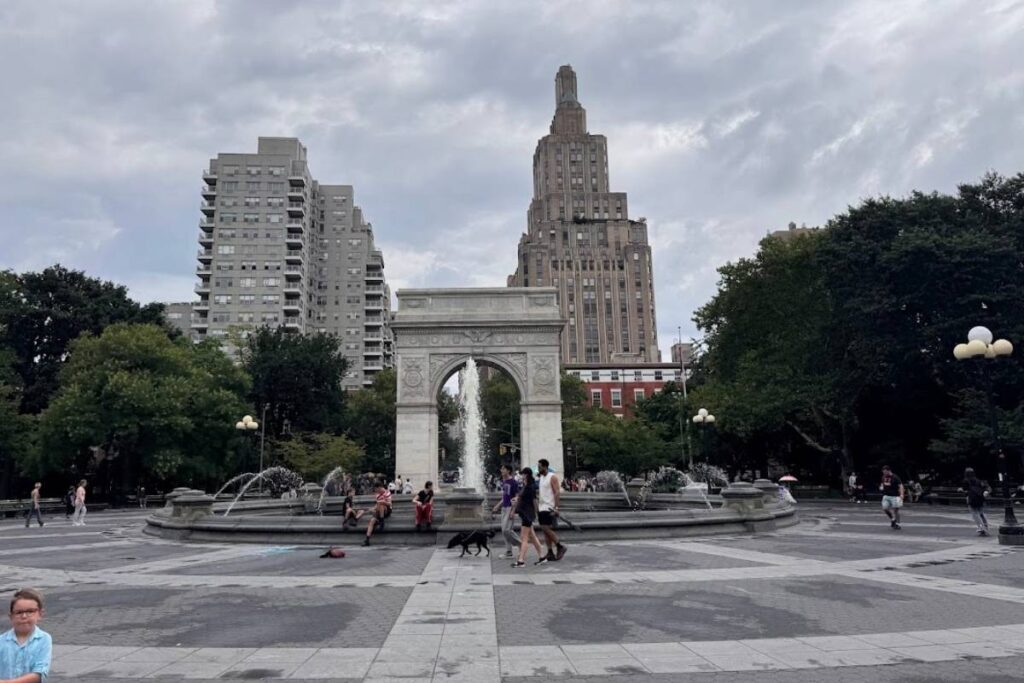
Walk west into Greenwich Village, the neighborhood that incubated the Beat Generation, the folk music revival, and the modern LGBTQ+ rights movement. Washington Square Park, with its iconic marble arch, is the social heart of the Village and one of the best people-watching spots in the city.
The surrounding streets are lined with brownstones, jazz clubs, comedy venues, and some of the oldest bars in Manhattan. The Blue Note and Village Vanguard are two of the most legendary jazz clubs in the world, both still hosting live performances nightly. If jazz isn’t your thing, the Comedy Cellar has launched the careers of comedians from Jerry Seinfeld to Amy Schumer and runs multiple shows every evening.
Day 5: Chelsea, High Line and Farewell
Morning: The High Line and Chelsea Market
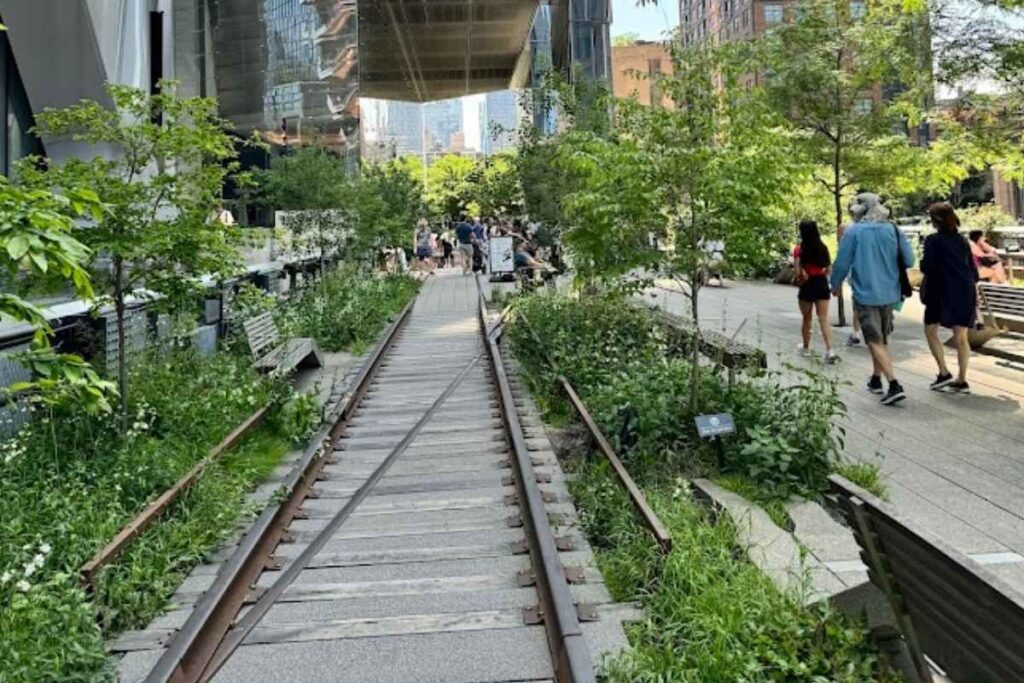
The High Line is a 2.3-kilometer elevated park built on a decommissioned freight rail line on Manhattan’s West Side, running from the Meatpacking District to Hudson Yards. Opened in sections between 2009 and 2014, it has become one of the most successful examples of urban reclamation in the world, with landscaped gardens, public art installations, and views of the Hudson River and the city that change with every block.
Start at the southern entrance on Gansevoort Street and walk north. Halfway through, descend into Chelsea Market, a food hall and marketplace housed inside the former Nabisco factory (where the Oreo cookie was invented in 1912). The vendors range from lobster rolls and tacos to artisan bakeries and specialty coffee, and the building itself is a beautiful piece of adaptive industrial architecture.
Afternoon: Hudson Yards and the Edge
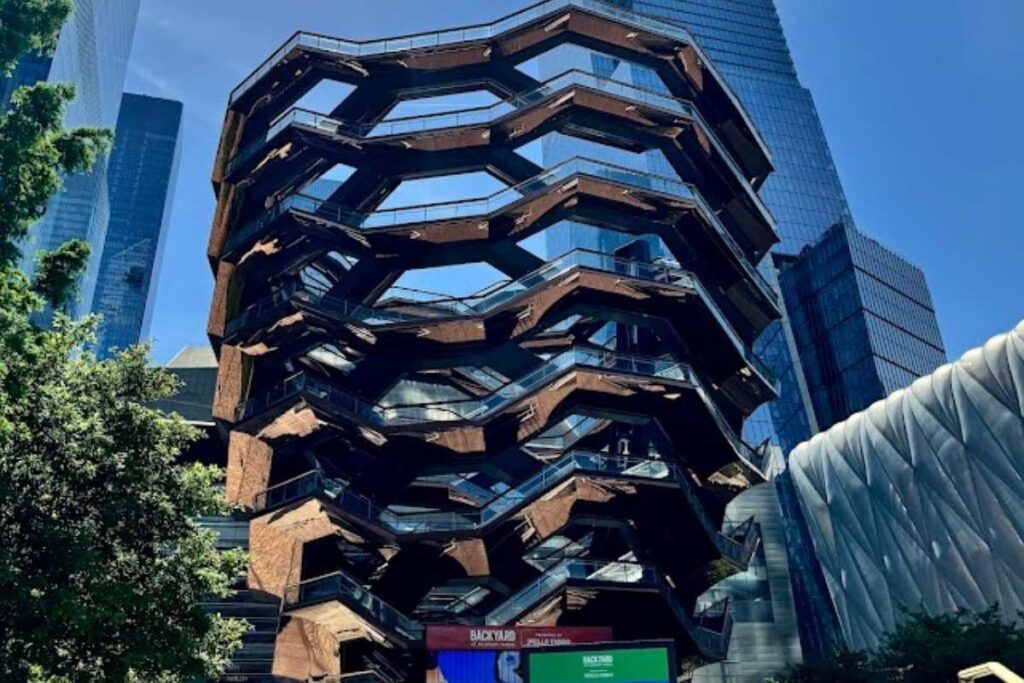
Continue north on the High Line to Hudson Yards, Manhattan’s newest neighborhood, built on a platform over the active rail yards of Penn Station. The centerpiece is The Vessel, a honeycomb-shaped structure of 154 interconnected staircases designed by Thomas Heatherwick, and Edge, the highest outdoor sky deck in the Western Hemisphere at 345 meters.
Edge’s glass floor panels and angled glass walls create the sensation of floating above the city, and on a clear afternoon, the views extend to the Statue of Liberty, the George Washington Bridge, and deep into New Jersey and Long Island. If you’ve already visited One World Observatory, Edge offers a Midtown perspective that complements it rather than repeats it.
Evening: Sunset and Farewell Dinner
Your last evening in New York should feel earned, not rushed. Two approaches work beautifully.
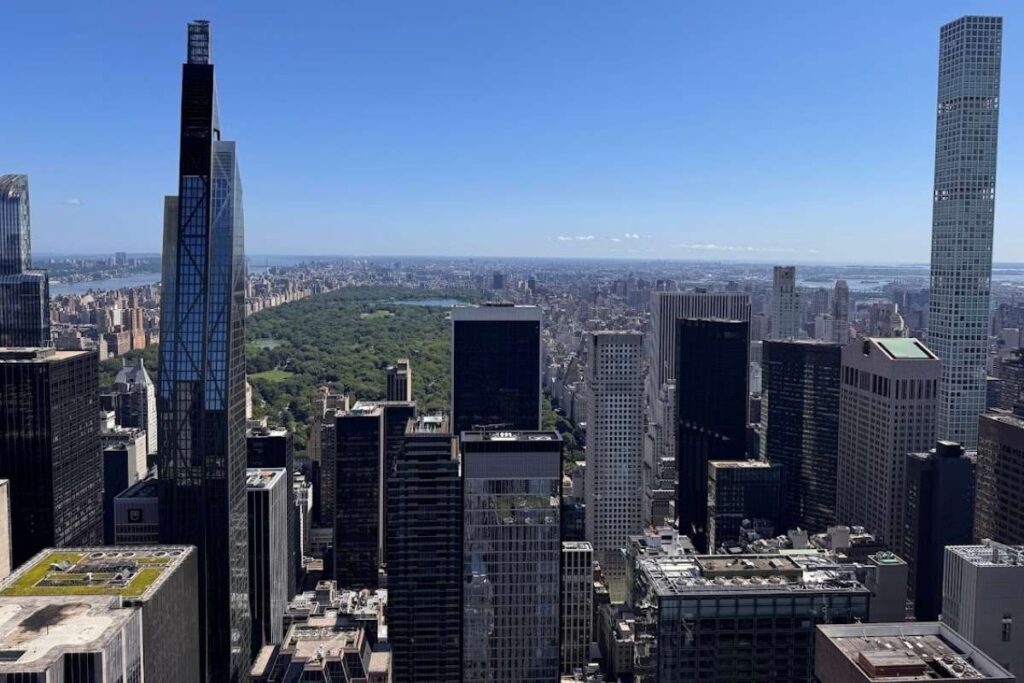
If you want the classic farewell, head to Top of the Rock at sunset. The observation deck at Rockefeller Center offers the best sunset views in the city because it’s the only major deck that puts both the Empire State Building and One World Trade Center in the same panorama, with Central Park stretching north behind you.
If you’d rather stay at street level, walk through the West Village as the evening settles in. The brownstone-lined streets, candlelit restaurants, and the sound of jazz drifting from basement clubs make this neighborhood the most romantic corner of Manhattan. Find a quiet table at a restaurant with a garden or a sidewalk seat, order something you’ve never tried, and let New York have the last word.
Practical Tips for Your 5 Days
New York is a walking and subway city. This itinerary averages 15 to 20 kilometers of walking per day, so comfortable shoes matter. The MTA subway runs 24 hours and costs $2.90 per ride (or $34 for a 7-day unlimited pass, which pays for itself quickly). Download a transit app and learn the basic lines: the 1/2/3 runs up the West Side, the 4/5/6 up the East Side, and the L crosses between Manhattan and Brooklyn.
Eat off the main avenues. The best food in New York is rarely on the streets with the most foot traffic. Walk one block in any direction from a tourist landmark and the quality goes up while the price goes down. Chinatown, the Lower East Side, Harlem, and Jackson Heights (if you have time for a quick subway ride to Queens) offer some of the best and most affordable food on the planet.
Tipping is not optional. In restaurants, 18 to 20 percent is standard. For guided tours, $10 to $20 per person is appropriate for a good experience.
The weather matters. New York has real seasons. Summers are hot and humid, winters are cold and windy, and spring and fall are the sweet spots. Pack layers regardless of when you visit, because the temperature inside subway stations, air-conditioned museums, and outdoor observation decks can vary by 15 degrees within a single hour.
And finally, look up. New York is a vertical city, and some of its most beautiful details, the Art Deco ornamentation on the Chrysler Building, the gargoyles on older residential buildings, the water towers on rooftops, exist above the sight line of anyone staring at their phone. Five days in New York is generous by most standards. Use them well, and the city will give you more than you expected.